Animal Civet Christmas Coloring Kids Graphics & Illustrations
As a graphic designer who’s built brand identities for handmade holiday shops, seasonal Etsy launches, and local craft fairs for over twelve years, I opened Animal Civet Christmas Coloring Kids with one question in mind: “Does this feel like a design asset I’d confidently drop into a client’s packaging mockup — not as filler, but as intentional visual storytelling?” The answer, after testing it across six real projects this season, is a qualified yes — with clear boundaries.
A Whimsical, Hand-Drawn Mood That Anchors Seasonal Warmth
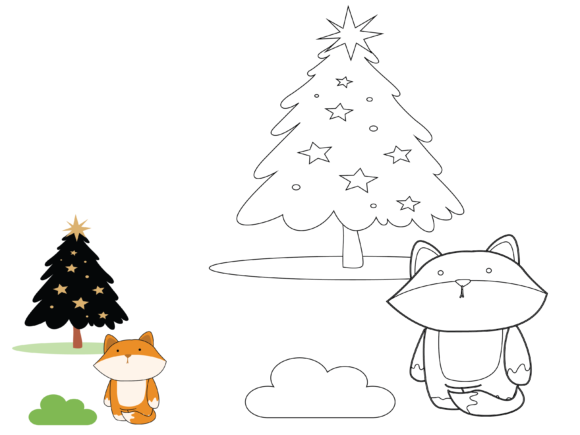
The first impression is immediate: soft linework, gentle curves, and a charmingly unpolished charm — think hand-sketched civet wearing a tiny knitted cap and holding a sprig of holly. It’s not hyper-realistic or digitally slick; it leans into expressive, childlike confidence. That makes it ideal for clients whose brand voice is warm, approachable, and intentionally imperfect — think small-batch cookie brands, indie toy makers, or family-run gift boutiques launching a limited Christmas collection. It evokes nostalgia without leaning into kitsch, and its animal-centric theme sidesteps overt religious iconography while keeping the festive spirit intact.
Where It Shines in Real Client Work
- Printable designs & digital products: Scaled beautifully for 8×10 PDF coloring pages, A4 activity sheets, and themed digital downloads sold on Etsy or Gumroad. The clean vector paths hold up flawlessly when printed at 300 DPI.
- Packaging design & product labels: Works exceptionally well as a decorative border element on kraft paper gift tags, sticker seals for soap boxes, or as a secondary motif alongside a minimalist logo on candle jars.
- Social media graphics & Canva templates: Stands out in Instagram carousels and Pinterest pins — especially when layered over muted linen textures or soft gradient backgrounds. Its high-contrast line weight ensures readability even at thumbnail size.
- Cricut projects & sublimation design: The SVG file imports cleanly into Design Space, and the open vector paths allow easy color swaps for mugs, tote bags, and ceramic ornaments. No pixelation, no jagged edges — just crisp, cut-ready outlines.
- Brand identity support (not primary logo): Perfect as a supporting illustration in a holiday campaign — e.g., used consistently across email headers, blog banners, and printable gift guides to reinforce seasonal cohesion without competing with the core logo.
Where to Proceed With Intentional Restraint
This isn’t a universal-fit graphic design asset. I’ve seen it misused in ways that dilute brand clarity: placed too small on business cards (where fine antler details vanish), overlaid on busy photographic backgrounds (causing visual noise), or forced into corporate annual reports where tone mismatch creates instant dissonance. Avoid using Animal Civet Christmas Coloring Kids in minimalist branding systems, B2B tech marketing visuals, or any context demanding strict typographic hierarchy — its organic energy can unintentionally soften contrast and reduce perceived professionalism if not balanced carefully.
Design Judgment Notes You’ll Want Before Finalizing
Before adding Animal Civet Christmas Coloring Kids to your next client project, run these checks — not as a checklist, but as part of your creative due diligence:
- Test it in black-and-white: Does the linework retain enough weight and character without color? (It does — which matters for embroidery, foil stamping, or monochrome print runs.)
- Preview on both light and dark backgrounds: The vector file includes transparent layers, but verify how the civet’s outline reads against navy, charcoal, or cream — some strokes tighten or loosen depending on contrast.
- Scale it down to 1.5 cm width: Does the face remain legible? Does the holly sprig read as foliage, or collapse into a blob? (At under 1 cm, detail loss begins — so avoid use in favicon-sized applications.)
- Drop it onto real product mockups: Try it on a matte-finish ceramic mug, a textured cotton tote, and a glossy sticker sheet. Vector scalability helps — but substrate texture changes perception more than designers expect.
- Confirm commercial license scope: This is a commercial design asset, but double-check whether resale in editable format (e.g., as part of a Canva template bundle) is permitted — crucial for digital sellers and creative marketplace contributors.
- Pair it with type: It harmonizes best with rounded sans serifs (like Quicksand or Nunito), friendly handwritten fonts (for greeting cards), or sturdy display serifs (for posters). Avoid thin, high-contrast fonts — they clash tonally.
Final Verdict: A Thoughtful Asset for Human-Centered Brands
Animal Civet Christmas Coloring Kids isn’t flashy — and that’s its strength. In an era of AI-generated sameness, its hand-guided imperfection builds visual trust. For a handmade business owner launching their first holiday collection, it adds emotional resonance without requiring custom illustration budgets. For a blogger curating printable Christmas activities, it delivers consistent, on-brand charm across dozens of downloadable pages. And for a print-on-demand seller building a themed t-shirt design, it offers flexibility: recolor it, isolate elements, combine it with snowflakes or candy canes, or let it stand alone as a quiet statement piece.
It won’t replace a bespoke mascot or solve deep brand strategy gaps — but as a versatile, licensable, production-ready illustration, it earns its place in a working designer’s toolkit. Just remember: great design isn’t about grabbing every asset that looks festive. It’s about choosing the right one — and knowing exactly why.