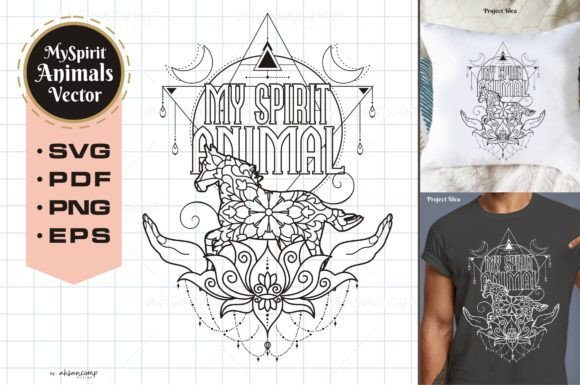
Horse My Spirit Animal
A Designer’s First Glance: Quiet Strength, Not Flashy Drama
When Horse My Spirit Animal loads on screen, it doesn’t shout—it breathes. There’s no cluttered border, no forced whimsy, no overwrought script. Just a clean, confident silhouette of a horse in mid-stride or gentle profile, depending on the version—fluid lines, balanced negative space, and subtle contour cues that suggest movement and presence without relying on heavy detail. It reads as timeless, not trendy. That matters. As someone who’s stitched hundreds of designs onto everything from baby onesies to boutique aprons, I know this kind of restraint is rare—and valuable. It’s the kind of embroidery file that won’t compete with fabric texture or overwhelm a small hoop, but still carries emotional weight.
Where It Lives Best: Real Projects, Not Just Pixels
I recently tested Horse My Spirit Animal on a natural linen tote bag for a local herbalist’s shop launch. No glitter, no monogram, just the design centered above the pocket in matte ecru thread. The result? Instant cohesion—calm, grounded, quietly meaningful. Customers paused. They asked about it. That’s the sign of a working design: it supports the product’s story instead of hijacking it.
This isn’t just a sweatshirt embroidery piece—it’s equally at home on a tea towel for a yoga studio, a minimalist pillow cover for a nursery, or an embroidered patch sewn onto a denim jacket. Its strength lies in versatility across handmade product categories: custom apparel, baby embroidery (think soft cotton burp cloths or muslin swaddles), holiday embroidery (a thoughtful gift tag or stocking accent), and even wedding gifts—imagine it stitched subtly on a linen napkin set or handkerchief.
For Etsy sellers and small shop owners, Horse My Spirit Animal works beautifully in printable mockups too. Its clean shape renders crisply in black-and-white previews, and it scales well across listing thumbnails without losing legibility—a quiet win for digital product sellers who rely on first impressions.
Where to Pause—and Why
That same elegance becomes a liability in certain real-world contexts. On stretchy fabric like lightweight knits or curved surfaces like caps, the fluid lines can blur if stabilizer isn’t carefully matched to the base layer. I’d avoid using it as a tiny chest logo on a fitted t-shirt unless you’ve confirmed the stitch density holds up under tension—some versions may pack too many fill stitches into narrow curves, risking puckering.
Thin fabrics (like voile or rayon challis) need extra backing; dense satin stitch areas in the horse’s mane or tail could pull or distort if not stabilized properly. And on dark fabric? Test thread color contrast early. A single-tone design relies entirely on tonal clarity—what reads as elegant on ivory linen might vanish on charcoal fleece without adjusting thread sheen or stitch type.
Also worth noting: while Horse My Spirit Animal falls under Illustrations and Graphics, it’s not inherently an applique design. If you’re planning layered fabric accents, confirm whether the file includes placement guides or separate cut files—many digital embroidery files assume direct-stitch execution.
What It Adds to Your Finished Product—Beyond Aesthetics
Customers don’t buy “a horse.” They buy resonance. When someone chooses Horse My Spirit Animal for a personalized gift—say, a custom embroidered blanket for a graduating equestrian or a baby’s first blanket—it signals intention. That lifts perceived value. It tells buyers your craft business pays attention to meaning, not just mechanics.
Visually, it reinforces professionalism. Clean lines read as intentional, not rushed. There’s no visual noise to distract from craftsmanship—so stitching clarity shines. Thread colors pop against the shape rather than fighting inside it. That builds trust: when the finished product looks as serene and resolved as the digital preview, repeat buyers follow.
For boutique branding or small shop merchandise, this design anchors consistency. Use it across packaging tags, tote bags, and staff aprons, and it becomes a quiet signature—not loud, but unmistakable.
Practical Notes Every Embroidery Designer Should Run Through
- Test first on scrap fabric—especially if pairing with textured weaves or blends. Linen, canvas, and medium-weight cotton behave very differently under needle and thread.
- Review stitch density before hooping. High-density fill areas may require tear-away + cutaway stabilizer combo on unstable bases.
- Confirm hoop size compatibility. Some variations of Horse My Spirit Animal may push 4” x 4” limits—measure the widest point in your software before committing to production.
- Inspect small details in the digital embroidery file: are eyes or nostrils defined by running stitch or implied by shape alone? That affects readability at smaller scales.
- Try black-and-white mockups alongside color. Does the silhouette hold its weight? If it flattens or fades, consider adjusting underlay or thread choice.
- Compare light and dark fabric backgrounds in your design software. What works on cream may need outline reinforcement on navy.
- Use proper stabilizer—not just “some,” but the right type for your fabric + machine + thread combo. Horse motifs often benefit from light water-soluble topping on napped fabrics.
- Check licensing before selling finished items or bundling the digital embroidery file. This is a DIGITAL DOWNLOAD of files—no physical items will be sent to you. Any backgrounds, logos, mock ups, photos, framed or cut images are for illustration purposes only. Included in this digital. Confirm whether commercial use is permitted for your intended application.
Final Thought: A Design That Earns Its Place
Horse My Spirit Animal isn’t flashy—but then, neither is good embroidery. It’s steady. It’s considered. It leaves room for the maker’s voice and the wearer’s story. Whether you’re an Etsy seller building a cohesive shop identity, a craft business owner sourcing reliable design assets, or a hobbyist choosing a meaningful motif for a handmade product, this is one of those rare graphics that feels like a collaboration—not just a download. Use it thoughtfully, test it honestly, and let its quiet strength do the speaking.