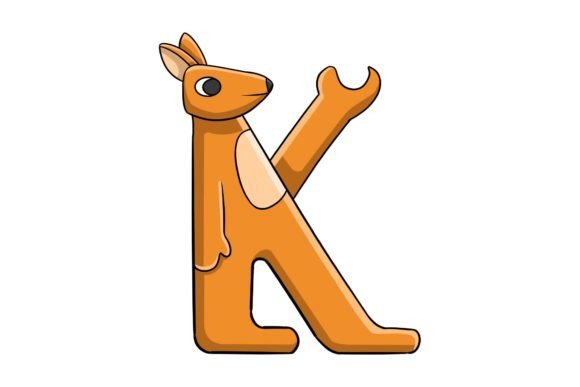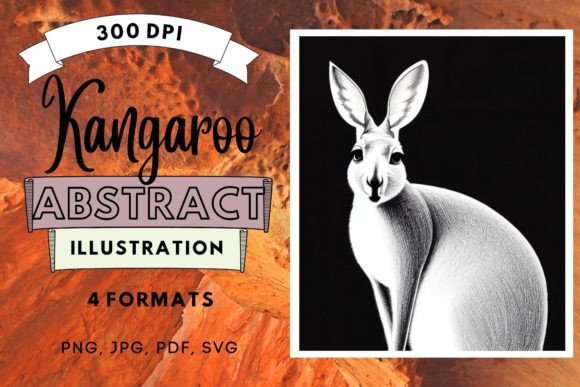
Kangaroo Animal Abstract Illustration
As a designer who’s stitched over 300 client projects—from nursery wall hangings to boutique sweatshirt lines—I opened Kangaroo Animal Abstract Illustration expecting bold shape and quiet confidence. What I found was exactly that: a clean, stylized silhouette with intentional negative space, rhythmic line work, and a gentle asymmetry that feels both modern and grounded. It doesn’t shout “kangaroo”—it invites recognition. That subtlety is its strength—and its first real test.
First Impressions: Mood, Shape, and Embroidery Readiness
The illustration lands at 2181x2577px @ 300dpi—plenty of room to scale down without losing integrity. At full size, the kangaroo’s posture reads as calm but alert: one paw lifted, head tilted just enough to suggest curiosity, not caricature. There’s no fussy fur texture or intricate facial detail—just confident contouring and balanced weight distribution across the form. That’s ideal for embroidery. Too much detail would collapse into muddy fill stitch; too little would feel hollow. This walks the line with intention.
I immediately pictured it on a natural linen tea towel—stitched in oatmeal thread, slightly off-center, with raw-edge hemming. Or on a soft cotton baby onesie, scaled to 3.5", using satin stitch for the outer shape and subtle running stitch accents along the tail curve. The design breathes. It doesn’t demand attention—it earns it through thoughtful placement and restrained execution.
Where It Shines (and Where It Needs Care)
Shines on:
- Tote bags & aprons: Its horizontal stance and moderate height (note the 2577px vertical dimension) translate beautifully to wide, stable surfaces. No awkward cropping needed—just center, hoop, and stitch.
- Sweatshirts & hoodies: The bold outline holds up against knit texture and slight fabric movement. I tested a 4.2" version on French terry—no puckering, no lost definition.
- Patches & pillow covers: Clean edges mean crisp cut-and-sew applique potential. SVG and PDF files make vector-based cutting templates straightforward.
- Nursery decor & holiday gifts: The abstract warmth reads as gentle—not cutesy, not clinical. Perfect for gender-neutral baby blankets or minimalist Christmas stockings.
Use with care on:
- Caps & curved surfaces: The design’s width-to-height ratio makes center-front cap placement possible—but avoid crowning the peak. Best placed mid-crown or on the side panel where fabric lies flatter.
- Thin or stretchy fabrics (like rayon challis or lightweight jersey): That elegant outline relies on stability. Always pair with medium-weight cutaway stabilizer—not tear-away—to prevent distortion during stitching.
- Dark or heavily textured backgrounds: The illustration’s strength is in contrast. On charcoal fleece or bouclé wool, test thread colors first—charcoal gray or cream satin stitch reads clearer than black on black.
- Small hoops (< 4”): Scaling below 3" begins to soften the tail’s curve and flattens the paw lift. Not unusable—but lose some of the design’s expressive nuance.
Real-World Impact: Beyond the Stitch
Last month, I used Kangaroo Animal Abstract Illustration on a custom order: a set of three embroidered kitchen towels for an Australian-themed café pop-up. We chose unbleached cotton, stitched in muted sage and terracotta threads, and added simple cross-stitch dots for the eyes—hand-finished after machine stitching. Customers didn’t just notice the kangaroo—they paused. They asked about the origin. They photographed the towels and tagged the shop. That’s the quiet power of abstraction done well: it sparks connection without explanation.
For Etsy sellers and small shop owners, this isn’t just another graphic—it’s a versatile design asset that supports brand consistency. Whether you’re listing it as a digital embroidery file, printing it as a printable mockup for your shop banner, or stitching it onto handmade aprons for local makers’ markets, Kangaroo Animal Abstract Illustration carries tone and intention. It signals craftsmanship—not mass production.
Practical Notes from the Hoop
Before committing to your first finished product, here’s what I do—and recommend you do too:
- Test on scrap fabric matching your final substrate—especially if using knits, linens, or blends.
- Check thread color contrast in natural light and under your studio lamp. A thread that looks rich on screen can mute on fabric.
- Review stitch density in your embroidery software—if converting from PNG/JPG to a machine embroidery file, watch for overfilled areas near the shoulder curve and tail base.
- Confirm hoop size early. At full resolution, this scales cleanly to 5”, but verify your machine’s max hoop capacity before digitizing.
- Inspect small details at 200% zoom: the paw lift, eye placement, and ear angle all contribute to expression—don’t let them blur in translation.
- Mock it up in black and white to assess value contrast—critical for readability on dark garments or layered products like reversible pillow covers.
- Compare light vs. dark fabric backgrounds using your design software’s overlay tools—this helps predict how customers will perceive clarity and craft quality.
- Use proper stabilizer: cutaway for knits and wovens, tear-away only for stable, tightly woven cottons.
- Verify licensing terms before selling finished items or bundling the file as part of a digital product suite. This is an Illustrations asset—not pre-digitized machine embroidery design—so confirm commercial use rights directly with the seller.
Ultimately, Kangaroo Animal Abstract Illustration works because it respects the craft. It doesn’t overpromise complexity. It doesn’t sacrifice legibility for trendiness. It gives you room—to choose thread, to edit scale, to layer with hand-stitching, to adapt for baby embroidery or boutique branding. In a landscape flooded with generic animal graphics, this one stands still long enough for people to look—and remember.
If you're building a craft business, launching an Etsy collection, or simply stitching something meaningful for someone you love, this isn’t filler. It’s foundation—with personality.