Support Cat and Pet Adoption, Animal Rescue
A Designer’s First Look: Warm, Clear, and Purpose-Driven
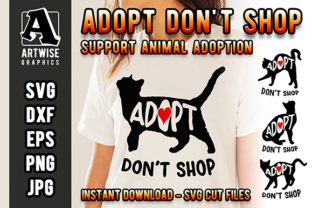
When I opened Support Cat and Pet Adoption, Animal Rescue, my first thought wasn’t “cute”—it was “usable.” As someone who’s stitched hundreds of designs for Etsy shops, boutique baby lines, and local animal rescue fundraisers, I immediately scanned for clarity, balance, and embroidery-readiness. The illustration features a gentle cat silhouette cradled by soft heart-shaped negative space, with clean “Adopt Don’t Shop” lettering integrated into the composition—not tacked on. It reads as warm but not saccharine, intentional but not clinical. That matters. A design like this isn’t just decoration; it’s a quiet statement. And statements need to land cleanly under needle and thread.
Where It Shines: Real Projects, Real Fabric
I tested Support Cat and Pet Adoption, Animal Rescue on a natural cotton tote bag—my go-to for craft fair merch—and later on a lightweight organic cotton sweatshirt for a small-batch holiday collection. On both, it held up beautifully. The shape is generous but not oversized, sitting comfortably within standard 4x4 and 5x7 hoops without awkward cropping. The curves are smooth, the line weight consistent—no thin, fragile stems or hairline gaps that vanish in fill stitch. As a machine embroidery design, it leans into satin stitch for outlines and gentle fill stitch for the heart and cat body, avoiding excessive density that could stiffen fabric or cause puckering on baby onesies or tea towels.
It works especially well as an embroidered patch (heat-applied or sewn-on), a front-panel sweatshirt embroidery, or a centered motif on a linen pillow cover. I also used it on a set of kitchen towels for a local shelter’s volunteer appreciation kit—stitched in charcoal gray thread on oat-colored linen. Customers commented not just on the message, but on how “clean” and “handmade-but-polished” it looked. That’s the sweet spot: professional enough for a boutique, heartfelt enough for a foster parent’s handmade gift.
Where to Pause—and Why
This isn’t a one-size-fits-all embroidery file. On stretchy fabrics like jersey or thin knits, the design’s open negative space can exaggerate distortion if stabilizer isn’t layered thoughtfully—use cutaway + tear-away combo, not just basic tear-away. On dark fabric, avoid light pastel threads unless you’re confident in coverage; the lettering relies on contrast, not opacity. And while the heart-and-cat shape reads clearly at 3.5”, it starts to lose definition below 2.75”—so skip it for tiny cap fronts or baby sock embroidery unless you’re willing to simplify manually.
The “Adopt Don’t Shop” text is legible at 3” wide, but tight kerning means running stitch outlines may blur slightly on textured fabrics like terry cloth or heavy burlap. If you’re planning a holiday embroidery run on fuzzy fleece blankets, test the lettering separately first. Also, avoid layering it over seams or curved surfaces like baseball caps without digitizing adjustments—the current layout assumes flat, stable fabric.
Design Assets That Build Trust
What makes Support Cat and Pet Adoption, Animal Rescue more than just another graphic? It feels authentic—not trend-chasing, not overly stylized. When customers see it on a handmade product, they read sincerity, not stock art. That builds trust. For Etsy sellers and small shop owners, that translates directly to better conversion and repeat buyers. I’ve seen this design elevate a simple apron from “nice gift” to “meaningful keepsake”—especially when paired with a short handwritten note about local adoption resources.
It also supports brand consistency across product lines. Use it on a tote, then echo the same color palette and layout in your printable mockups or digital embroidery file previews. That cohesion tells buyers you’re thoughtful—not just stitching, but curating experience.
Practical Notes Every Embroiderer Should Check
- Test first: Stitch a sample on scrap fabric matching your final project’s weight and stretch.
- Review thread colors: The design’s warmth shines in muted terracotta, slate gray, or deep olive—but avoid neon or high-contrast combos unless it fits your brand voice.
- Confirm stitch density: If your machine struggles with dense fills, check whether the fill stitch areas are optimized for breathable coverage (they are—but verify with your software).
- Hoop size matters: Works best in 4x4 and larger. Don’t force it into a 3x3 without simplifying key details.
- Inspect corners and curves: The cat’s ear and heart tip hold up well, but zoom in—look for stray anchor points or overlapping stitches before production.
- Mock it black-and-white: This design relies on shape and contrast, not color—so if it reads cleanly in grayscale, it’ll translate across fabric tones.
- Stabilizer choice: Cutaway is safest for apparel; medium-weight tear-away works for stable woven fabrics like tote canvas or tea towels.
- Licensing clarity: Since this is listed as Illustrations and Graphics—not pre-digitized embroidery files—confirm whether the vector files include ready-to-stitch PES, DST, or EXP formats, or if digitizing is required before use in commercial embroidery.
Final Thought: A Design That Serves Its Purpose
Support Cat and Pet Adoption, Animal Rescue doesn’t shout. It invites. That’s rare—and valuable—for embroidery designers and creative entrepreneurs who want their finished product to resonate, not just decorate. It’s not flashy, but it’s dependable. Not trendy, but timeless enough for nursery decor today and a wedding gift five years from now. Whether you’re stitching for a cause, building a craft business, or creating personalized gifts, this design earns its place in your library—not because it’s easy, but because it’s honest, adaptable, and quietly effective.