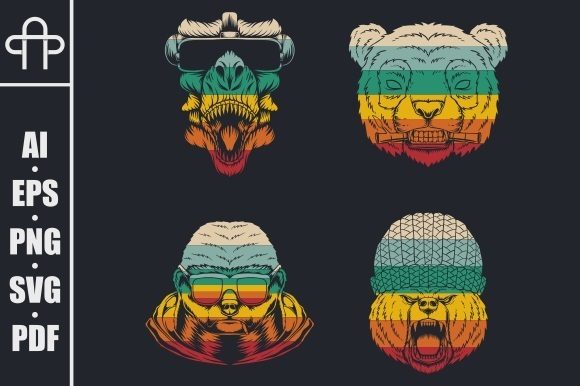
Animal Collection Retro
A Designer’s First Glance: Playful, Nostalgic, and Ready for Stitching
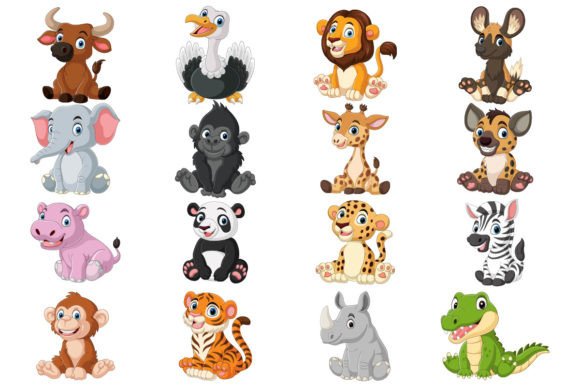
Opening Animal Collection Retro feels like flipping through a well-loved vintage sticker book—think bold outlines, simplified silhouettes, and that unmistakable mid-century charm. It’s not hyper-realistic or overly detailed; it’s intentionally graphic, with clean negative space and confident shapes. As an embroidery designer who’s stitched everything from nursery wall art to boutique aprons, I immediately saw how this collection would translate: strong satin stitch borders, balanced fill areas, and breathing room between elements—critical when thread meets fabric.
Real-World Test: A Custom Embroidered Tote Bag for a Local Bakery
Last week, I prepped a set of embroidered canvas totes for a neighborhood bakery’s holiday pop-up. They wanted something cheerful but timeless—not cutesy, not clinical. Animal Collection Retro fit perfectly: I chose the fox motif, scaled it to 3.2" wide, and stitched it on the front pocket of a natural cotton tote. The result? Crisp edges, no thread nesting in corners, and a design that held up beautifully after two rounds of gentle machine washing. Customers paused to smile at the fox—not because it was flashy, but because it felt *intentional*, handmade, and quietly memorable.
Where This Design Shines (and Why)
- Custom apparel: Works especially well on sweatshirts and structured tees—the bold lines read clearly even on textured fleece or brushed cotton.
- Embroidered patches: Clean outer edges and moderate detail make it ideal for sew-on or iron-on patches used on denim jackets or backpacks.
- Baby embroidery: Gentle curves and open shapes avoid dense stitch clusters—ideal for onesies and burp cloths where softness and breathability matter.
- Holiday and gift items: The retro warmth reads as nostalgic rather than dated, making it versatile for Easter baskets, baby showers, or teacher appreciation gifts.
- Etsy and small shop products: Its illustrative nature lends itself to cohesive branding—pair it with matching printable mockups or simple SVG-based packaging labels.
Where to Proceed Thoughtfully
Animal Collection Retro isn’t designed for micro-detail work—and that’s okay. As a designer, I’d avoid using it on projects requiring:
- Small hoop sizes under 4” (some motifs need breathing room to retain their graphic impact);
- Thin or highly stretchy fabrics (like lightweight jersey) without proper cutaway stabilizer—those clean outlines rely on fabric stability;
- Dark fabric without testing thread contrast first—some lighter-colored animals may need tone-on-tone or slightly richer thread to avoid looking washed out;
- Curved surfaces like caps unless you’re using a cap frame and have verified stitch alignment on a test run;
- Frequent-wash items like kitchen towels unless you confirm fill stitch density won’t cause stiffness or pilling over time.
What It Adds to Your Finished Product—Beyond Aesthetics
When you choose Animal Collection Retro, you’re not just selecting a machine embroidery design—you’re choosing a certain kind of perception. Customers notice the confidence in its lines. That translates to trust: they sense care in the design choice, which elevates your handmade product from “nice” to “thoughtfully made.” For Etsy sellers, that nuance affects conversion. For craft fair vendors, it helps your booth stand out without shouting. And for boutique owners building a cohesive aesthetic, these illustrations pair effortlessly with neutral linens, matte ceramics, or hand-dyed yarns—no clashing, no overcomplicating.
Practical Notes Every Embroidery Designer Should Check
- Always run a test stitch on scrap fabric that matches your final project’s weight and texture—especially important for satin stitch borders.
- Review stitch density in your embroidery software: look for tight fills in small animal eyes or ears, and adjust if needed for breathability.
- Confirm hoop size compatibility before digitizing or resizing—some files may assume standard 5x7” or larger.
- Inspect corners and inner curves closely in your viewer—retro style relies on clarity, not complexity.
- Test the design in black-and-white mockups to assess silhouette strength and readability at smaller scales.
- Compare how it reads on both light and dark fabric backgrounds—this is essential for product photography and listing accuracy.
- Use appropriate stabilizer: medium-weight cutaway for knits, tear-away for stable wovens, and optional topping for napped fabrics like terry cloth.
- Verify licensing terms before selling finished embroidered goods or bundling the digital embroidery file—it’s listed as Graphics, so commercial use may require confirmation.
Final Thought: A Quietly Versatile Workhorse
Animal Collection Retro won’t dominate a room—but it will earn quiet compliments, linger in memory, and hold up across seasons and stitches. It’s the kind of illustration that supports your craftsmanship instead of competing with it. Whether you’re stitching a personalized gift for a new parent, building a line of nursery decor, or refreshing your craft business’s embroidery portfolio, this collection delivers consistent, confident, and commercially smart design assets. It’s not trend-chasing. It’s thoughtful curation—with thread.